What it’s for
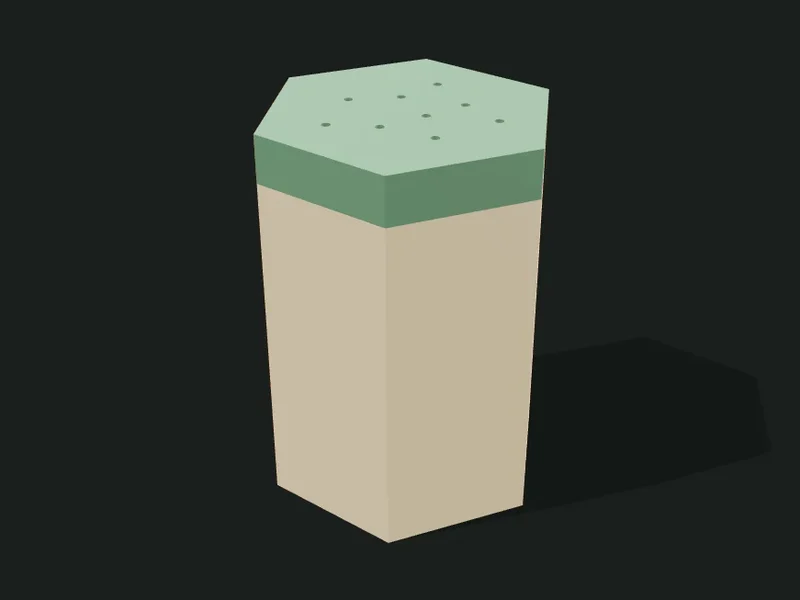
Jars with a screw-on lid designed for the kitchen. The thread is coarse, jar-style, so it doesn’t jam with salt or sugar. The lid can be solid (for storage), a salt or pepper shaker with small holes, a sugar bowl with a slot for the spoon, or a double spice lid that rotates to choose between small holes or a big opening. It also builds custom organizers for those jars (tray, tiered base, wall shelf or basket with handle) and a thread test to tune the clearance.
Ideas
- Set of matching spice jars with their tray or wall shelf.
- Table salt and pepper shakers.
- Sugar bowl with a slot to leave the spoon inside.
- Stackable jars for legumes, coffee or yerba.
Step by step
- First of all, print the «Thread test» preset: it’s a neck and 3 short lids with different clearances. Keep the one that closes best.
- Enter that clearance in «Thread › Clearance».
- Choose a jar preset (airtight, salt shaker, pepper shaker, sugar bowl, double spice jar or stackable).
- In «Jar» adjust the shape, width, height and texture; in «Lid», the type and the holes.
- For the organizer, switch «Print» to «Organizer» with the same jar sizes and choose the type.
- Export. Jar and lid come out as separate parts.
Tips
- The thread test saves you lids that don’t close: it takes a few minutes and uses very little filament.
- For fine salt, 1.5–2 mm holes; for ground pepper or oregano, 3–4 mm.
- For food use, use food-safe PETG or PLA and wash by hand; the layers can trap residue.
- The organizer uses the jar’s width and height: keep them the same as your jars’ so they fit.
Presets
Parameters
Jar
What gets printed, the jar’s shape and size, its texture and whether it stacks.
«Jar and lid» prints the jar. «Organizer» prints a base, shelf or basket sized for those jars. «Thread test» prints just a neck and 3 short lids with different clearances, to find the one that closes well with your printer.
Shape of the jar seen from above: round, hexagonal or square with rounded corners. The thread is always round.
Width of the jar: the diameter for round, or across flats for hexagonal and square. It also sets the thread diameter.
Height of the jar’s body, without the lid.
Thickness of the jar’s wall. 2 mm is sturdy; big jars can take more.
Thickness of the jar’s bottom. 2 mm is enough for normal use.
Outer relief of the jar: flutes, rings, facets, diamonds, honeycomb, organic cells, basket weave, scales, bricks or organic. It’s added on the outside and doesn’t affect the thread.
How far the texture sticks out. 1–1.5 mm shows and gives a good grip.
Adds a chamfered foot under the jar that fits into the lid of the jar below, to stack them without falling. The lid prints upside down.
Thread
The thread between jar and lid: pitch, turns and clearance.
Distance between thread crests. A coarse thread (3 mm) closes fast and doesn’t jam with salt or sugar.
How many turns the lid takes to close. 1.5–2 closes firmly; more turns seal better but take longer.
Play between the jar’s thread and the lid’s, measured on the radius. It depends on your printer: use the clearance of the test lid that closes best. 0.3–0.4 mm is usual.
Organizer
Tray, tiered base, wall shelf or basket sized for the jars.
Type of organizer: countertop tray with recesses for the jars, tiered base (each row higher, like bleachers), wall shelf with rail, or basket with handle to bring to the table.
How many jars fit in each row of the organizer.
Number of rows of jars (in the tray and tiered base).
Number of levels (shelves one above the other) of the wall shelf.
How many rows of jars there are on each side of the basket’s handle.
Space between one jar and the next in the organizer. 4–6 mm lets you grab them with your fingers.
Play between the jar and its recess in the organizer. 0.6–1 mm goes in and out without jamming.
How much higher each row is than the one in front on the tiered base. 20–25 mm lets you see the labels at the back.
Height of the wall shelf’s rail, which keeps the jars from falling.
«Keyhole slots»: the shelf hangs from two screws and can be removed. «Countersunk screws»: it stays fixed to the wall.
Diameter of the wall screws. 4 mm is a regular screw with a 6 mm wall plug.
Height of the basket’s walls, as a percentage of the jar height. 40–50 % holds the jars and lets the lids show.
Perforation of the basket’s walls: honeycomb, circles, teardrops (no overhang), diamonds, slots or not perforated.
Lid
The type of lid and its holes or slot.
Type of lid: solid (for storage), salt or pepper shaker (with small holes), sugar bowl (with a slot to leave the spoon) or rotating double spice lid (a disc that turns to choose small holes, big opening or closed).
Number of holes in the shaker or spice lid. 7–13 is typical.
Diameter of the holes. Fine salt: 1.5–2 mm; pepper and oregano: 3–4 mm.
Width of the sugar bowl’s slot. Measure your spoon’s handle and add 1–2 mm.