What it’s for
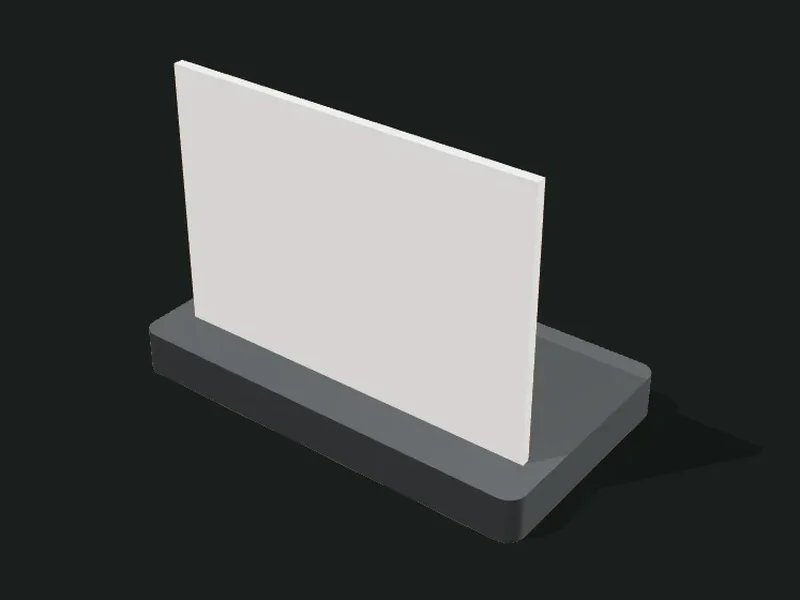
A lithophane is a thin sheet that shows a photo when you put a light behind it: where the sheet is thicker less light passes (dark tones) and where it’s thinner more passes (light tones). You upload a photo and the tool generates a plate with a stand and room for an LED tealight, an arc or a cylinder to make a lamp.
Ideas
- Personalized gift with a photo of family, a couple or a pet.
- Cylindrical night lamp with a landscape.
- Souvenir of a trip or an event.
- Light-up photo frame for the desk.
Step by step
- Choose a preset: «Plate with stand and light», «Large plate without stand», «Desk arc» or «Cylindrical lamp».
- In «Photo» load your image (PNG or JPG). Without an image a sample landscape is shown.
- Adjust the contrast while looking at the viewer from behind the plate.
- In «Shape» choose plate, arc or cylinder and the width of the photo.
- In «Thicknesses» keep the recommended values and choose the detail.
- Export and print in white or natural, with 100 % infill.
Tips
- Print in white PLA, standing up (vertical) and with 100 % infill: that’s how the details look best.
- Use thin layers (0.12 mm) and low speed so the tone transitions are smooth.
- Photos with good contrast and without very dark backgrounds work best; crop the photo before uploading it.
- The image only shows with light behind it: without light the plate looks like meaningless relief.
Presets
Parameters
Photo
The image and how its tones turn into thickness.
The photo (PNG or JPG). Photos with good contrast and without very dark backgrounds work best. Without an image a sample landscape is shown.
Inverts lights and darks, like a negative. Useful for special effects or silhouettes; for normal photos leave it off.
Adjusts the midtones. More than 1 darkens them (more contrast in light areas); less than 1 lightens them (more detail shows in the shadows).
Shape
Flat plate, arc or cylinder, and its size.
«Plate»: flat, like a picture. «Arc»: curved, it stands on its own on the desk. «Cylinder»: the photo wraps all the way around, to put a light inside like a lamp.
Width of the printed photo. The height comes from the image’s proportions. In the cylinder it’s the full circumference: the diameter is calculated from it.
How much the arc curves. 90–120° stands on its own and looks good from the front; tighter looks like half a cylinder.
Adds a stand with a slot the plate fits into and a recess for an LED tealight (38–40 mm in diameter).
Thicknesses
How thin and how thick the sheet is, the frame and the level of detail.
Thickness of the sheet in the lightest parts of the photo. 0.8 mm lets a lot of light through; less may leave holes.
Thickness in the darkest parts. 3 mm barely lets light through; thicker gives deeper blacks but needs more light.
Width of the plain frame around the photo. It stiffens the plate and gives a neat finish. 0 removes it.
Level of detail of the mesh: how many millimeters apart each point of the photo is sampled. «Normal» (0.3 mm) suits a 0.4 nozzle; «Fine» gives more detail but the file is much bigger.